

When a DeFi protocol runs into trouble, the available liquidity can disappear quickly, creating a liquidity trap. Users rush to withdraw, and those who react later may find that there is no longer enough liquidity to get out. An early warning is valuable only if there is time to act on it.
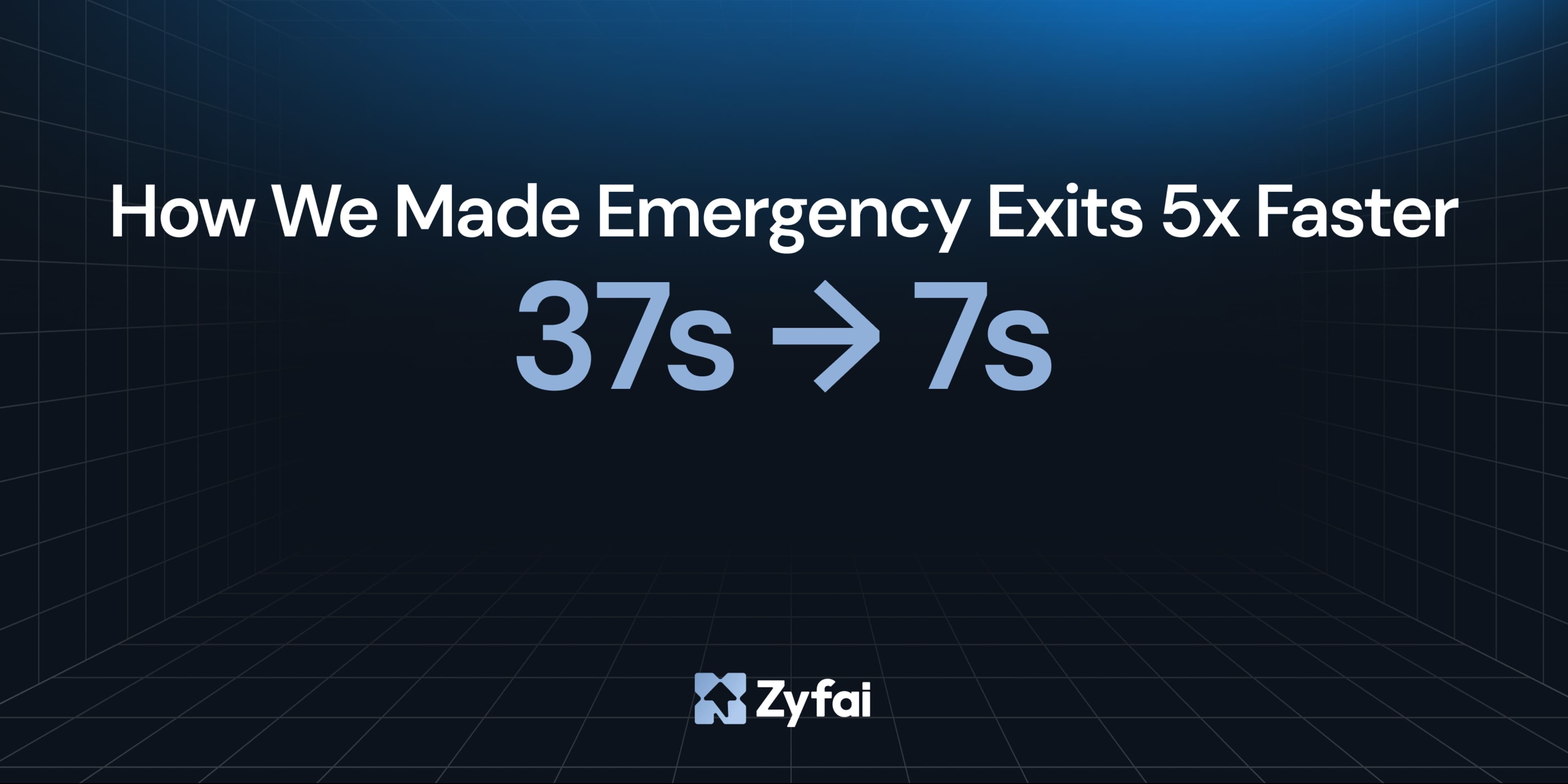
That is the problem we have been working on since integrating Glider Monitor by Hexens. Our latest response-time result is 7 seconds, down from the original 37 seconds, after changing how we move funds out of an affected position.

The signals behind the response
While funds are deployed, we monitor onchain and offchain signals across collateral health, pool liquidity and protocol risk. This includes stablecoin pegs, pool TVL, available liquidity, and how large user positions and Zyfai's total exposure are relative to a pool's size and available liquidity.
We check for sharp yield increases accompanied by falling TVL, curator allocation changes, newly added collateral, unusual contract activity and governance changes. Periodic collateral reviews also cover backing, market liquidity and trading volume. Public sentiment monitoring sends alerts about protocols and collateral to our risk monitoring layer and quant team.
Glider Monitor adds live-transaction monitoring for attacks and protocol-specific checks. On MetaMorpho vaults, we watch for ownership changes and queued timelock reductions that would shorten the time available to react. On Morpho Blue, a drop in the supply exchange rate can flag bad debt being passed on to lenders.
Signals from our monitoring checks and Glider Monitor feed into the same risk monitoring layer. When a position is flagged for an emergency exit, the execution backend automatically withdraws the affected users' funds to idle.
Where the extra time went
In our original test on Base, the clock started when our API received a Glider Monitor alert and stopped when the full rebalance into a new pool was confirmed. Passing the alert to the execution backend took 80ms. The 37-second response ended with one atomic transaction that rebalanced the position from the affected vault into a new pool.
That approach worked, but it made the emergency response do more than it needed to. Reallocating capital is useful during normal operation but during an incident, it adds time while other users may already be withdrawing from the same pool.
A direct route to idle
We simplified that response to a direct withdrawal to idle. The 7-second result is for that withdrawal to idle.
When a protocol or pool triggers an emergency exit, every affected user's balance is automatically withdrawn to their own Yield Account. Funds stay there, undeployed and outside the affected pool. Finding and entering another yield opportunity is no longer part of the immediate exit, and users do not need to approve the withdrawal manually.
During incidents, every second matters for protecting user capital. Responding faster helps us get funds out while liquidity is still available and reduce the risk of losses. That focus on capital preservation is what our users value in Zyfai.
We will keep working to reduce response time further and strengthen our risk monitoring layer.
Capital preservation first, yield second.
About Zyfai
Zyfai gives you self-custodial access to autonomous low-risk DeFi. Our customizable rule-based Agents transform your idle capital into productive assets, rebalancing between curated opportunities.
The result is sustainable and risk-adjusted yield, where your capital is always working and under your control.